
A KitchenAid refrigerator is supposed to keep your food fresh and your ice dispenser running smoothly. When it doesn’t, the frustration builds fast, especially when a service call can run $200 to $400 before any parts are even replaced. The good news? Many common KitchenAid refrigerator problems are diagnosable and fixable at home without calling a technician. This guide walks you through the most frequent issues homeowners encounter, how to pinpoint what’s wrong, and practical repairs you can tackle yourself. You’ll learn when it’s worth a DIY attempt and when you genuinely need a professional.
Table of Contents
ToggleKey Takeaways
- Most common KitchenAid refrigerator repair issues—including temperature control, water dispensers, and ice maker jams—can be diagnosed and fixed at home, saving $200–$400 in service calls.
- Check power, thermostat settings, door gaskets, and air vents first; a faulty seal or blocked vent is often the culprit behind uneven cooling or dispenser malfunctions.
- Clearing defrost drain lines and replacing door gaskets are among the easiest DIY repairs, costing $30–$80 in parts and requiring only basic tools like a screwdriver.
- Water inlet valve failures and ice maker jams can be addressed at home with a plastic scraper and warm water flush, but valve replacement ($40–$150) or ice maker assembly replacement ($150–$250) may require professional service.
- Always unplug your KitchenAid refrigerator before attempting repairs, and use gentle techniques—never force components or use metal tools on heating elements to avoid damage.
Common KitchenAid Refrigerator Problems
KitchenAid refrigerators are built well, but they’re not immune to wear and age. Understanding which problems pop up most often helps you recognize symptoms early and avoid food spoilage or water damage.
Temperature Control Issues
The fridge runs but doesn’t get cold enough, or one section freezes while the other stays warm. This is one of the most reported complaints. Uneven temperatures often stem from a faulty thermostat, a blocked air vent between compartments, or compressor issues. If your fridge is holding 45°F when it should be at 38°F, the thermostat may not be signaling the compressor to run properly. Start by checking whether the refrigerator is cycling at all, listen for the compressor kick on every 15 to 20 minutes. If it’s silent for hours, refrigeration isn’t happening.
Another culprit is ice buildup. The defrost system clears ice from the evaporator coils automatically, but if the drain line gets clogged, water backs up and freezes the vents. You’ll notice uneven cooling, frost accumulation, or water pooling in the crisper drawer.
Water and Ice Dispenser Malfunctions
A dispenser that won’t produce ice, delivers slow trickles, or leaks water is frustrating and wasteful. The water inlet valve controls flow into both the ice maker and water dispenser: if it sticks or fails, neither works. Ice makers also jam when they don’t cycle properly, the mold fills but doesn’t heat the release element, leaving ice stuck in the tray. Over time, mineral deposits from hard water can clog inlet lines and nozzles, reducing flow to a disappointing dribble.
How to Diagnose Your Refrigerator Issue
Don’t start pulling parts out yet. Spend 10 minutes narrowing down the problem. This saves time and prevents unnecessary replacement of expensive components.
Check the basics first. Is the refrigerator plugged in and getting power? Sounds silly, but a tripped breaker or loose cord has stopped many DIYers in their tracks. Look at the control panel, if it’s dark, power is your first suspect. Once power is confirmed, verify the thermostat setting. Many temperature issues resolve by bumping the dial from “off” to “3” or “4.” If the fridge hums but doesn’t cool, the issue is deeper.
Listen and feel. A working refrigerator cycles regularly. The compressor should hum, kick off with a soft click, stay quiet, then restart after 15–30 minutes. No cycling at all means the thermostat or compressor isn’t signaling. For dispensers, listen for a faint hum when you press the ice button, if there’s silence, the water inlet valve or the ice maker motor may have failed.
Inspect the seals and vents. Open the fridge and check the gasket (the rubber seal around the door). A torn or warped seal lets warm air in constantly, forcing the compressor to run nonstop without reaching the target temperature. Push on the gasket: it should snap back firmly. For the interior vents, remove any food blocking the openings between the fridge and freezer. Air circulation is essential. If you see frost blocking the vent, defrost operation isn’t working. These steps help identify common problems quickly before diving into component replacement.
DIY Repair Solutions You Can Try at Home
Many repairs require no special skills, just patience, basic tools, and willingness to get your hands a little dirty. Always unplug the refrigerator before opening panels or handling electrical components. Safety first.
Fixing Cooling Problems
Clear the defrost drain. If the fridge is cold but uneven, or water pools inside, the defrost line is likely blocked. Locate the small drain port, typically at the bottom rear of the fridge interior or in the freezer section. It’s usually a half-inch opening. Grab a turkey baster or a flexible 18-inch plastic tube. Flush warm water through the opening to clear ice and sediment. Push gently: don’t force it and risk puncturing the line. You can also pour a small amount of distilled white vinegar through to dissolve mineral deposits. Let it sit for 30 minutes, then flush with warm water again.
Replace the door gasket. A torn or hardened seal is a common fix and costs $30–$80 in parts. Close the fridge door on a dollar bill, if it slides out easily, the gasket isn’t sealing. Order the correct gasket for your KitchenAid model number. Remove four hex bolts or clips holding the old gasket in the door frame, slide it out, and press the new one in until it clicks. No adhesive or tools beyond a Phillips screwdriver needed.
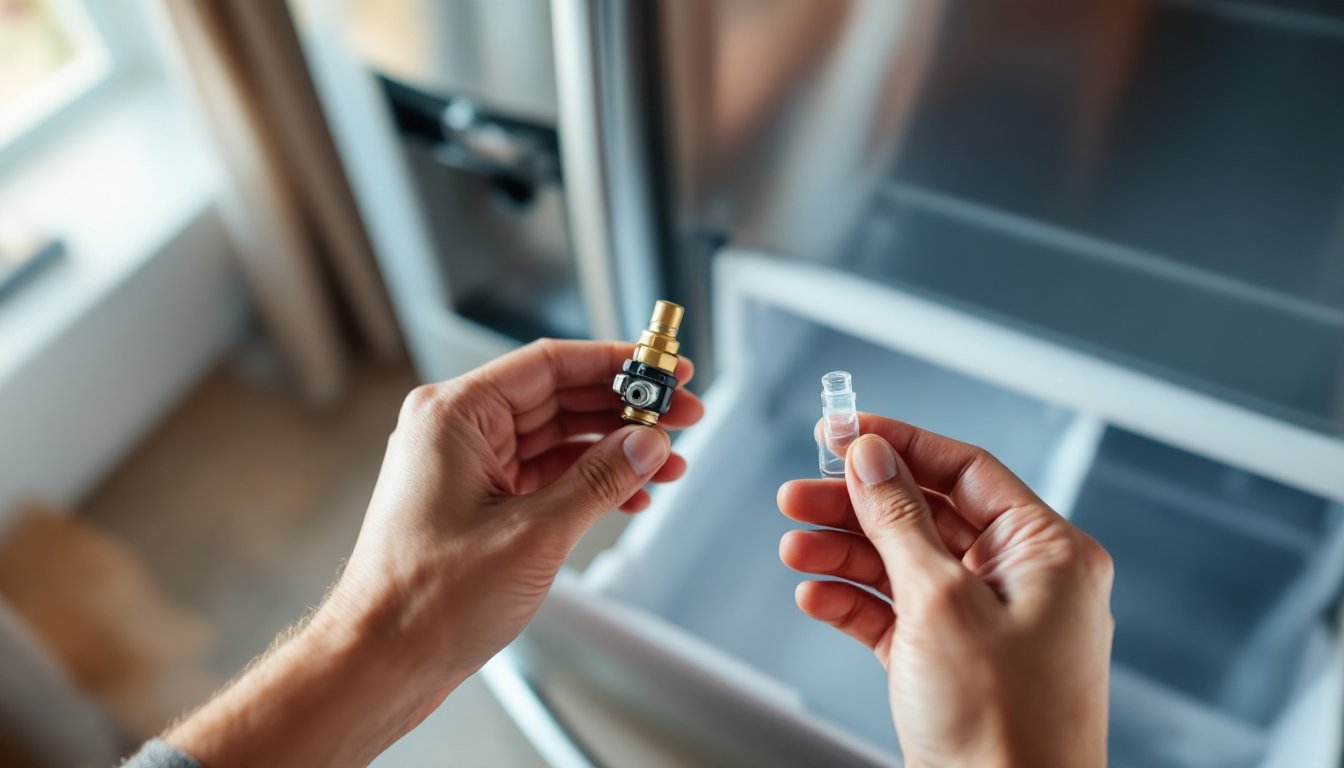
Check the water inlet valve. If the ice maker fills slowly or stops entirely, the water inlet valve may be frozen or blocked. Locate it behind the crisper drawer, it’s a cylindrical component about 2 inches long with a wire harness attached. Unplug the refrigerator. Disconnect the water line by squeezing the compression fitting (have a towel ready for water spillage). Listen for a click when you press the valve stem, that confirms electrical contact. If there’s no click or hum, the valve needs replacement. A new inlet valve runs $40–$150 depending on the KitchenAid model. Disconnect the wiring harness, unbolt the valve, and install the new one in reverse order. Hand-tighten fittings: overwrightening cracks plastic connectors.
Repairing Dispenser and Seal Issues
Clear ice jams in the ice maker. If ice cubes aren’t ejecting, the release heater may have failed, or ice has frozen solid in the mold. Unplug the fridge and locate the ice maker assembly (usually in the freezer). You’ll see a cube-shaped mold. If ice is visibly jammed, use a plastic scraper or wooden spoon to gently chip it free. Never use a metal pick, you’ll damage the heating element. If ice clears but the maker doesn’t cycle again after replugging, the thermostat or heater coil is worn. This typically requires professional service or a $150–$250 replacement assembly.
Flush the water dispenser line. A slow or stopped water dispenser often has sediment clogging the nozzle or supply line. Use a turkey baster filled with warm water to flush directly through the nozzle opening. Hold a cup underneath to catch the water. If it trickles instead of flowing, disconnect the line at the back of the fridge (the small flexible tube running from the water inlet to the door dispenser). Blow air through it firmly, you may hear a whistle or feel pressure drop as an air pocket releases. Reconnect and test. For step-by-step visual guides, online maker communities offer detailed tutorials specific to your model. Always reference your manual’s diagram, component locations vary by year and trim level.