
Texas heat and humidity don’t take days off, and neither should your HVAC system. Royse City homeowners face unique climate challenges, scorching summers that demand reliable cooling and unpredictable winters that test heating performance. When your air conditioner or furnace starts acting up, knowing what’s broken, whether you can handle it yourself, and who to call makes all the difference. This guide walks through common HVAC problems, realistic DIY maintenance, and how to find a trustworthy repair service that gets your system running efficiently again without emptying your wallet.
Table of Contents
ToggleKey Takeaways
- HVAC repair in Royse City requires addressing climate-specific issues like clogged filters from dust and pollen by replacing air filters every 30–90 days to maintain system efficiency.
- Refrigerant leaks, frozen coils, and noisy compressors demand professional diagnosis—attempting DIY fixes can void warranties and create safety hazards that cost more to repair.
- Simple preventive maintenance, including annual spring AC and fall heating tune-ups, catches problems early and saves thousands in emergency repair costs.
- When hiring an HVAC repair service, verify Texas HVAC licensing and EPA certifications, compare quotes from at least three companies, and prioritize reputation over the lowest bid.
- Know your DIY limits: filter replacement and thermostat battery changes are manageable, but electrical work, refrigerant handling, and ductwork repairs require a licensed technician.
Common HVAC Problems Homeowners Face In Royse City
The Texas Dust and Pollen Problem
Royse City’s climate means HVAC systems work overtime filtering dust, pollen, and humidity. A clogged air filter is the most common culprit behind poor performance. When the filter gets packed with debris, airflow drops, your system works harder, and efficiency tanks. You’ll notice reduced cooling or heating, higher energy bills, or the system cycling on and off frequently. Replacing a standard 1-inch filter every 30 days (or 3 months for thicker MERV-13 filters) prevents this headache.
Refrigerant Leaks and Low Charge
If your AC cools weakly or not at all, a refrigerant leak is often the reason. The system loses pressure, can’t absorb heat properly, and you’re stuck in a hot home. Unlike a car’s oil, refrigerant doesn’t “use up”, if levels drop, there’s a leak somewhere in the line, condenser, or evaporator coil. This requires a licensed technician. Adding refrigerant without fixing the leak is a Band-Aid: the system will leak again.
Thermostat Drift and Control Issues
A faulty thermostat sends wrong temperature signals, causing short cycling (frequent on-off cycles that waste energy) or the system ignoring your settings entirely. Some are battery-powered: others are hardwired. Replacing batteries is a quick fix. If that doesn’t work, recalibration or replacement is needed, another task for a pro.
Frozen Evaporator Coils
Counterintuitively, humidity-heavy Royse City summers can freeze evaporator coils if airflow is too restricted or refrigerant charge drops too low. Ice buildup blocks heat transfer, and the AC stops cooling. The system may also drain condensation poorly, creating water damage inside walls. Don’t chip the ice off yourself, address the underlying airflow or refrigerant issue first.
Noisy Compressors and Blower Motors
A rattling, grinding, or squealing sound often signals worn bearings, loose components, or a failing compressor. Grinding is serious: it means metal-on-metal friction. Squealing might be a worn serpentine belt. Some noises are annoying but harmless: others mean the system is failing. Ignoring grinding or metal-on-metal sounds risks catastrophic failure and a $3,000–5,000 compressor replacement instead of a $50 belt swap.
When To Call A Professional HVAC Technician
Repairs That Demand A Licensed Pro
Refrigerant handling, electrical work, gas line repairs, and compressor service all require EPA certification and state licensing. Texas requires HVAC technicians to hold a valid EPA Section 608 certification to handle controlled substances. DIY attempts void warranties, create safety hazards (refrigerant is toxic, high-voltage capacitors can deliver fatal shocks), and often cost more to fix when done wrong.
Structural issues like ductwork leaks, mold growth in plenum spaces, or gas furnace pilot light failures belong in a pro’s hands. Many jurisdictions require permits for furnace or AC replacement, unpermitted work can hurt home resale and insurance claims.
When DIY Reaches Its Limit
If you can’t locate the problem with basic filter checks and thermostat testing, call a tech. Strange noises, weak airflow even though a clean filter, uneven room-to-room temperatures, or water pooling around the indoor unit all need professional diagnosis. A diagnostic fee (typically $75–150) saves you from guessing and potentially making things worse.
Finding Help Fast
During Royse City’s brutally hot summers, HVAC techs get slammed. Plan ahead: have your system serviced in spring before peak demand, so you’re not waiting a week when it breaks in July. Resources like ANGI’s list of heating connect you with vetted local pros. Get two or three quotes for major repairs or replacements: pricing varies by shop and system type.
DIY Maintenance Tips To Prevent Costly Repairs
Filter Replacement: The First Line of Defense
Your simplest and most impactful task is replacing the air filter on schedule. Locate the filter in your return air ductwork (often a basement, attic, or utility closet). Measure its dimensions (common sizes: 16×25×1″, 16×25×4″, 20×25×1″) and buy the correct MERV rating. MERV-8 filters trap common dust and pollen: MERV-11 or MERV-13 filters work harder for allergies but restrict airflow if your blower motor isn’t robust. Check monthly: replace when visibly dirty or per manufacturer guidance (30–90 days depending on MERV and dust load).
Keeping Outdoor Condenser Units Clear
Your AC condenser sits outside and faces Texas weather. Keep weeds, grass, and debris at least 2 feet away from all sides. Trim branches overhead. Once yearly, gently clean the fins with a soft brush and garden hose, don’t use a pressure washer (fins are delicate). Clear ice or frost by turning off the system and letting it thaw naturally.
Thermostat Checks
If battery-operated, replace batteries twice yearly (spring and fall). Clean the thermostat face gently with a dry cloth, dust blocks sensors. If your heating or cooling never quite hits the setpoint, slight calibration drift is normal, but repeated misses warrant a technician’s look.
Ductwork and Vents
Inspect visible ducts for obvious disconnections or damage. Ensure return air vents (where air gets pulled in) and supply vents (where cooled/heated air exits) aren’t blocked by furniture, curtains, or pets. Blocked vents force the system to work harder and unevenly condition spaces.
Annual Professional Tune-Ups
Have a licensed tech perform a spring AC check ($100–150) and fall heating check ($100–150). They’ll measure voltage and amperage, check refrigerant charge, test safety controls, inspect heat exchanger or combustion, and replace or clean burner components. This catches problems early, extends system life by years, and often qualifies you for discounted repair rates if breakdowns happen.
What To Expect During An HVAC Service Call
The Diagnostic Walk-Through
When the tech arrives, have your system description ready: age, model number (find it on the nameplate), and a clear description of symptoms (not cooling, making noise, etc.). A good technician will ask questions: How long has the issue occurred? Do some rooms cool/heat better than others? Has there been a power outage? They’ll then inspect the indoor and outdoor units, check air filters, examine ductwork connections, and test thermostat operation.
Measurements and Testing
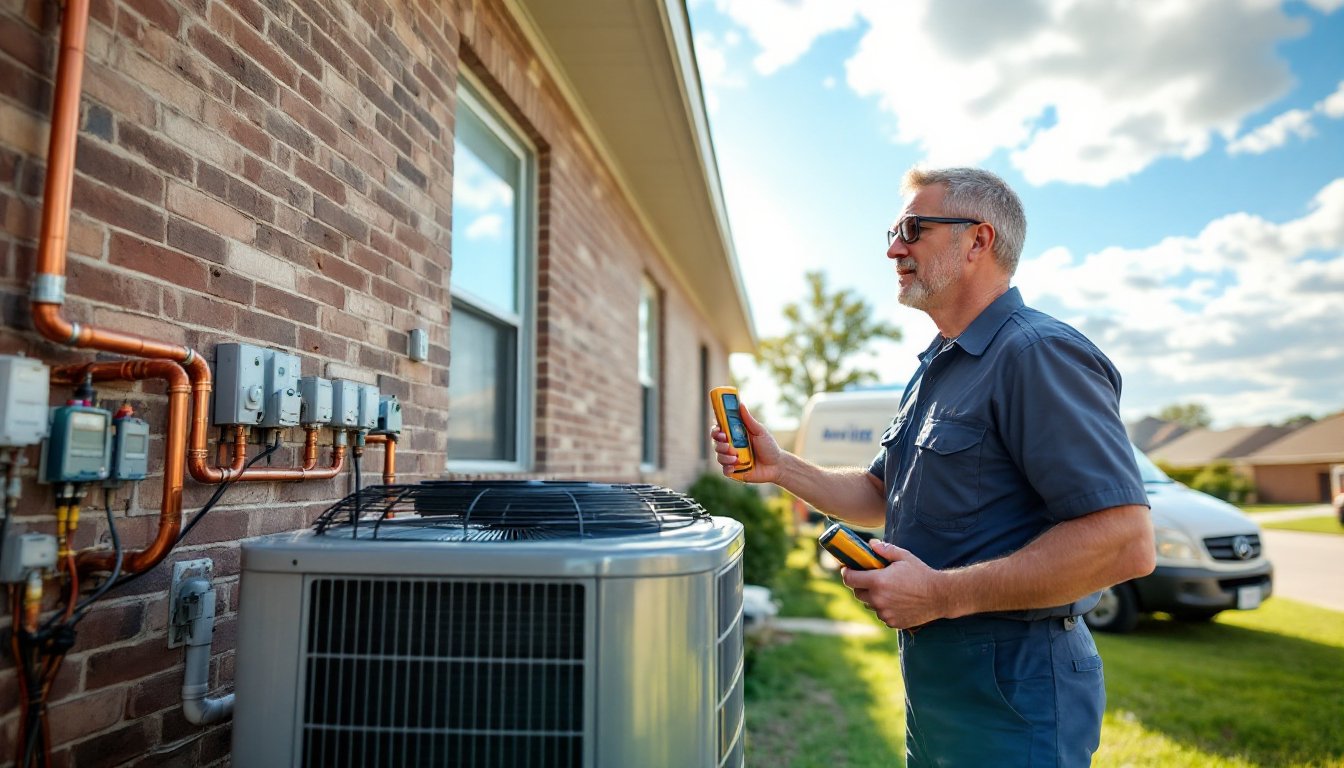
Expect them to use tools like a multi-meter (to test electrical continuity), a clamp meter (to measure current draw), and a thermometer or infrared gun (to check temperature differentials). They’ll measure the temperature difference between supply and return air, a healthy AC should drop about 15–20°F across the evaporator coil. These numbers help confirm whether the system is functioning at design specs or needs repair.
The Honest Assessment
A reputable tech will explain whether a repair is economical or if the system is aging out. If the compressor is failing, refrigerant leaks are numerous, or the heat exchanger is cracked, a replacement might be smarter than a $1,500 repair on a 15-year-old system. They should provide a detailed quote, including parts, labor, and warranty details. Don’t settle for vague pricing: get it in writing.
After the Repair
Ask for a written receipt showing work performed, parts replaced, and any warranty (labor warranties typically run 1 year: refrigerant charge warranties 2–5 years). Some companies offer service agreements that bundle yearly maintenance with discounted repairs, often a good value if you plan to stay in the home long-term.
Finding The Right HVAC Repair Service In Royse City
Local Reputation and Licensing
Verify the company holds a valid Texas HVAC license and EPA certifications. Check the Texas Department of Licensing and Regulation (TDLR) database or ask for proof directly. Read reviews on Google, Yelp, and local directories, look for patterns, not one-off complaints. A company with 50+ five-star reviews and a few critical ones (normal wear) is usually trustworthy.
Transparent Pricing
Reputable shops don’t quote over the phone without a tech visit. They’ll schedule a free or low-cost diagnostic, then provide a detailed, itemized quote. Avoid ultra-low bids, they often hide surprise charges or cut corners on workmanship. Mid-range pricing from licensed, established companies correlates with quality. Platforms like HomeAdvisor help you compare contractors and read verified customer reviews before commitment.
Warranties and Guarantees
Standard warranties cover parts (1–5 years) and labor (1 year). Extended warranties exist but read the fine print, they often exclude pre-existing conditions or cosmetic wear. A company guaranteeing workmanship and standing behind repairs builds confidence.
Local Expertise
Royse City has specific humidity and temperature patterns. Techs familiar with the area understand how climate stresses systems here. They know local building codes, utility rebate programs (many Texas utilities offer efficiency incentives), and seasonal demand swings. Ask if they service commercial and residential accounts, commercial experience often means stricter attention to detail.
Getting Multiple Quotes
Call three companies, schedule diagnostics, and compare quotes side-by-side. Don’t just chase the lowest number: weigh reputation, warranty, and response time. For major replacements (whole system), the difference between quotes might be $2,000–5,000, shopping around pays dividends. Expert guidance from sources like Bob Vila on contractor recommendations helps separate skilled operators from fly-by-night shops.
Conclusion
HVAC repair in Royse City doesn’t have to mean guessing or overpaying. Start with the basics, filter changes, outdoor unit clearance, and annual tune-ups, to catch problems early. Know your limits: refrigerant work, electrical repairs, and structural fixes are licensed-tech territory. When you do call a pro, ask questions, get quotes in writing, and choose a reputation-backed shop over the cheapest bid. A well-maintained system keeps you comfortable year-round and saves thousands in emergency repairs down the line.