
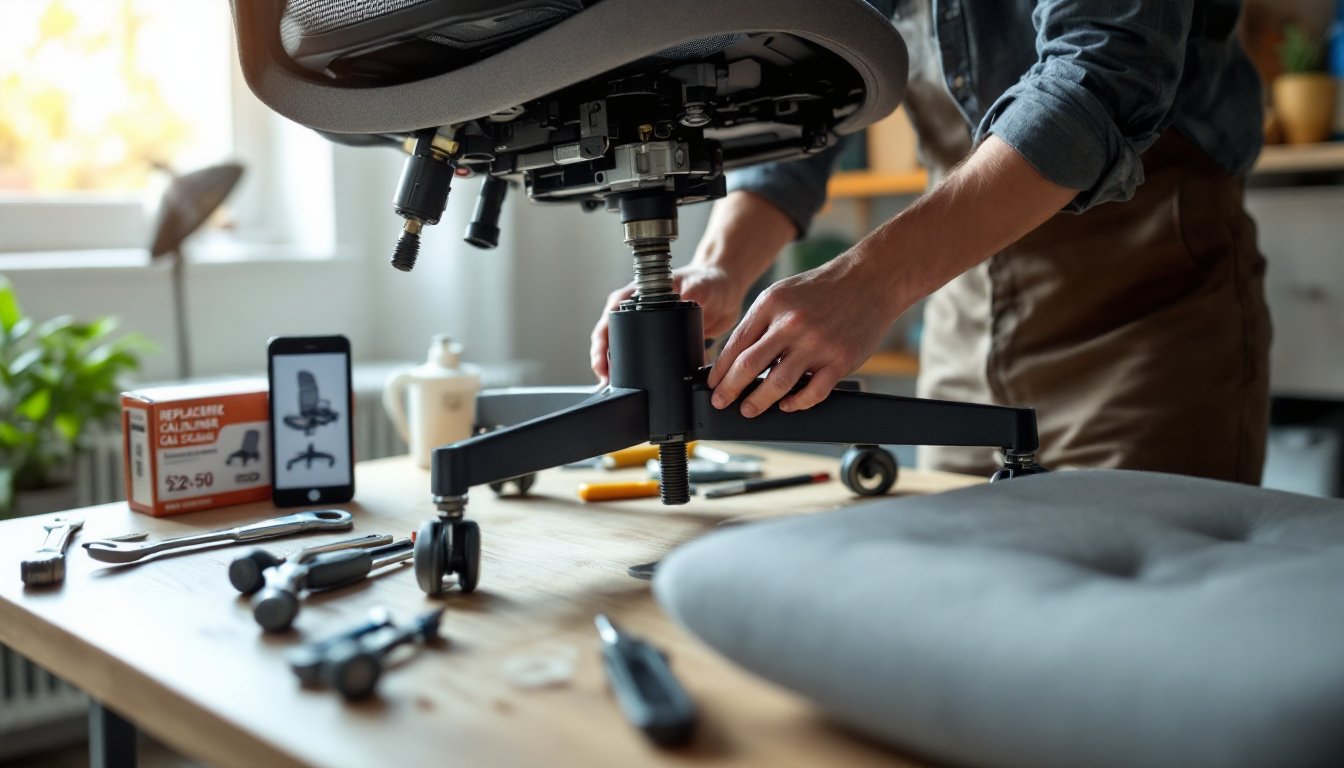
A creaky office chair isn’t just annoying, it’s a distraction that kills your focus. Whether you’re working from home full-time or using a hand-me-down from the office, most office chair problems are fixable without calling a pro. The good news: most repairs require only basic tools and 15 to 30 minutes of your time. This guide walks you through diagnosing common issues and tackling them with confidence, from squeaky wheels to gas cylinder failures.
Table of Contents
ToggleKey Takeaways
- Most office chair repairs require only basic tools and 15 to 30 minutes, making DIY fixes a practical solution before calling a professional.
- Diagnose your office chair issue first by listening for squeaks, testing stability, and identifying which component is failing to determine the right fix.
- Office chair wheel squeaks can be eliminated by cleaning debris and applying silicone spray lubricant, while cracked wheels should be replaced in complete sets of five.
- A failing gas cylinder is a safety concern and cannot be field-repaired—you must replace it if your chair sinks slowly or drops suddenly, a process taking under an hour.
- Small fabric tears under 2 inches can be patched with adhesive kits for $5–$10, while larger damage or worn cushions may require full replacement costing $30–$80.
- Start office chair repair with the easiest fixes like tightening fasteners and cleaning wheels before moving to complex work, and always prioritize safety when dealing with gas cylinders.
Diagnose Your Office Chair Issues
Before you grab a wrench, figure out what’s actually broken. Sit in the chair and listen for squeaks, creaks, or rattles. Push down on the seat and note if it wobbles or sinks unevenly. Test the armrests, wheels, and recline mechanism. Does the chair lean to one side? Does it stay at your desired height, or does it slowly sink throughout the day?
Write down what you notice. Most office chairs have a limited number of moving parts: the base, wheels, gas cylinder (also called a pneumatic cylinder), seat tilt mechanism, armrests, and upholstery. Once you pinpoint the culprit, the fix is usually straightforward. Common issues include loose fasteners, worn wheels, torn fabric, and a failed gas cylinder, all of which you can handle at home.
Fix Squeaky Wheels and Wobbly Bases
Squeaky Wheels
Office chair wheels (called casters) pick up dust, hair, and grit over time. Start by removing the wheel from the base. You can usually pop it off by gripping the stem where it inserts into the base and pulling straight out. Use a damp cloth to wipe the wheel clean and remove debris from the stem. If the squeak persists, apply a light coat of silicone spray lubricant to the wheel axle and stem, then reinstall. Test it, most squeaks disappear immediately.
If the wheel is cracked or flat-spotted (one side worn flat), it’s time to replace it. Casters are inexpensive ($3–$8 each) and come in standard sizes. Buy a replacement that matches your chair’s height and load rating, then swap it in. Always replace wheels in sets of five for even rolling.
Wobbly Base and Loose Fasteners
Turn the chair upside down (or recline it fully and look at the underside). Inspect where the base connects to the seat support. Tighten any bolts, screws, and fasteners with the appropriate wrench or screwdriver. Focus on the connection points where the gas cylinder inserts into the base and where the backrest attaches to the seat pan. Loose fasteners are often the culprit behind wobbling and creaking.
If the base itself is cracked or bent, replacement is your only option. Most bases cost $40–$80 and take about 10 minutes to install, you’ll need to remove the old one, detach the casters and gas cylinder, and bolt on the new base.
Repair Damaged Upholstery and Cushions
Small tears in fabric can be patched without reupholstering the entire chair. For a small rip (under 2 inches), use a fabric adhesive patch kit (available at fabric or hardware stores for $5–$10). Cut a patch slightly larger than the tear, apply the adhesive according to package instructions, and press it over the damage. Let it cure for the recommended time before using the chair.
For larger tears or worn cushion covers, you have two choices: patch it as above, or replace the seat cushion. Cushion covers are often glued or stapled to the foam underneath. If the foam itself is compressed or flattened, you’ll want to replace the entire cushion rather than just the cover, a new cushion costs $30–$80 depending on quality. Remove the old one by carefully peeling away the fabric or cutting staples with a utility knife, then glue or staple the new cushion in place.
Worn upholstery that’s faded or discolored but not torn can be refreshed with a fabric spray dye or upholstery protectant spray, though these are cosmetic fixes. If the damage is extensive or you prefer a professional finish, reupholstery shops can recover your chair for $100–$300, depending on fabric choice and chair complexity.
Address Gas Cylinder and Height Adjustment Problems
The gas cylinder (or pneumatic cylinder) is the hollow tube inside the base that lets you raise and lower the seat. A failing cylinder won’t hold height, or worse, it’ll drop suddenly under weight. This is a safety concern, a collapsing chair can cause injury, so address it promptly.
First, test the cylinder by sitting in the chair and using the height adjustment lever. If the seat sinks slowly over time, the cylinder is losing pressure. If it drops suddenly or won’t stay up at all, it’s failed. There’s no field repair for a bad cylinder: you must replace it.
Replacing a Faulty Gas Cylinder
You’ll need a replacement gas cylinder (cost: $20–$50, depending on lift capacity and chair model), a socket wrench or adjustable wrench, and pliers. Match the cylinder’s lift rating to your chair, check the model number on the old cylinder or your chair’s manual.
- Remove the seat. Flip the chair upside down or tilt it back fully to access the seat pan bolts. Unbolt the seat from the base, then set the seat aside.
- Remove the old cylinder. The cylinder sits inside the base and connects to the seat support with a retaining clip or bolt. Use pliers to remove the retaining clip, or unbolt the connection. Pull the cylinder straight out of the base.
- Install the new cylinder. Insert the new cylinder into the base, ensuring it aligns with the seat support hole. Secure it with the retaining clip or bolt.
- Reattach the seat. Bolt the seat back to the base, then test the height adjustment. The chair should now raise and lower smoothly.
If you’re uncomfortable working under the chair or the cylinder won’t budge, a repair shop can handle this in under an hour. Repair costs typically run $50–$150 in labor, depending on your region.
Tighten and Replace Armrests
Loose or wobbly armrests are easy fixes. Turn the chair upside down or look under the armrest where it connects to the seat. Tighten any bolts or screws with a wrench or screwdriver. If the bolt spins without tightening, the threaded hole may be stripped: try a slightly larger bolt or consider adding a locking washer under the bolt head to prevent it from loosening again.
If an armrest is cracked, broken, or worn smooth from years of use, replacement is the practical choice. Armrests typically cost $15–$40 per pair and bolt on in minutes. Match the mounting style (usually two bolts per armrest) and height to your chair, then unbolt the old ones and slide on the new ones. Some chairs have padded armrest covers that slip over a plastic core: these can be replaced separately for $10–$20 if the core is still good.
Note that professional office chair repair services can handle any of these fixes if you’d rather not DIY, though labor costs may outweigh replacement for older chairs.
Conclusion
Most office chair repairs are within reach if you have basic tools and 30 minutes. Start with diagnosis, tackle the easiest fixes first (tightening fasteners, cleaning wheels), and move to more involved work like cylinder replacement if needed. When in doubt about safety, especially with gas cylinders, err on the side of replacement. A working chair is worth the small investment in parts, and you’ll save the time and cost of a new chair.