
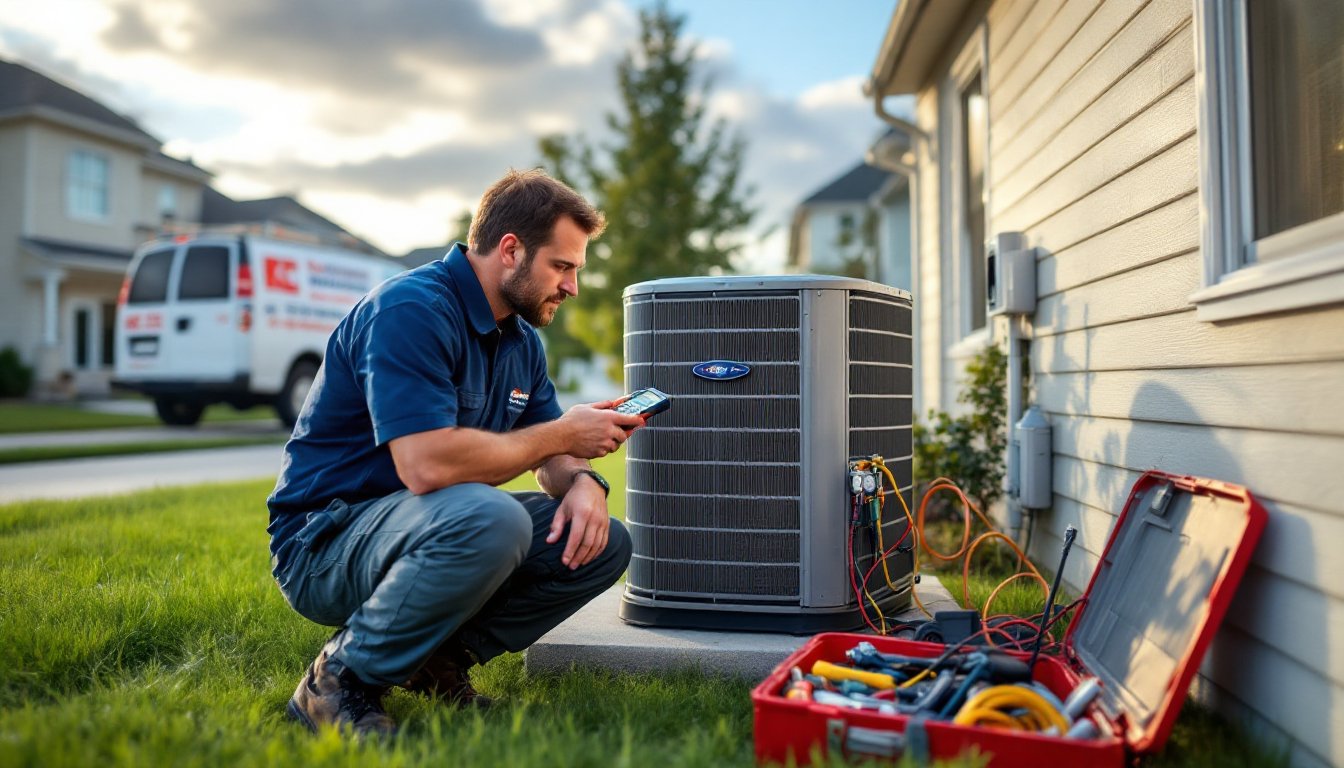
When your air conditioning stops working in the middle of summer, or worse, your furnace quits during a cold snap, finding a trustworthy HVAC repair service near you becomes urgent. The problem is that not all technicians are created equal, and a bad repair can cost you thousands in the long run. This guide walks you through what to look for in a qualified technician, how to search for reliable services in your area, and how to compare costs without getting taken advantage of. Whether you need emergency repairs or routine maintenance, you’ll learn the practical steps to find someone who knows their trade and won’t oversell you.
Table of Contents
ToggleKey Takeaways
- Finding trustworthy HVAC repair near me requires vetting at least three companies, comparing written quotes, and checking credentials like state licensing, EPA certification, and insurance before hiring.
- Professional HVAC maintenance twice yearly prevents costly breakdowns and preserves warranties, while neglected systems can cost $5,000–$15,000 to replace.
- Use Google Maps, Yelp, and the BBB to search for local HVAC repair services with 4.5+ stars and at least 50 reviews, while asking neighbors and contractors for personal referrals.
- A qualified HVAC technician should offer transparent communication, provide 1–2 year labor warranties, and explain repairs clearly without using jargon to confuse you.
- Watch for red flags like suspiciously low quotes, aggressive upselling of system replacement when repairs suffice, and companies unwilling to itemize costs or explain their work.
- Basic troubleshooting like checking thermostat settings, verifying breaker status, and inspecting air filters can resolve simple issues, but anything beyond that requires a certified professional.
Why Your HVAC System Needs Regular Professional Maintenance
Your heating, ventilation, and air conditioning system is one of your home’s most expensive investments. Like a car engine, it needs regular tune-ups to run efficiently and last as long as possible. Most manufacturers recommend professional maintenance at least twice a year, ideally in spring before cooling season and fall before heating season.
A technician will clean coils, check refrigerant levels, inspect ductwork for leaks, test thermostat calibration, and replace or clean filters. These small steps prevent catastrophic failures down the road. A system that hasn’t been serviced in years often has buildup that makes it work harder, costs more to run, and breaks down at the worst possible time. Neglect also voids many equipment warranties, which means you’re on the hook for the full replacement cost if something goes wrong, easily $5,000 to $15,000 depending on your system size and type.
How To Search For HVAC Repair Services In Your Area
Finding a qualified service starts with a smart search strategy. You have several paths: online directories, review platforms, local recommendations, and contractor referral networks. Don’t just pick the first result or the cheapest quote you see. Spend 20-30 minutes vetting options before you call anyone.
Using Online Directories and Review Platforms
Google Maps and Yelp are your first stops. Search “HVAC repair near me” and look at services with 4.5+ stars and at least 50 reviews. Read recent reviews carefully, pay attention to comments about pricing transparency, punctuality, and whether the technician explained the work before starting. Platforms like Angi help you find, making it easier to compare options side-by-side. Check the Better Business Bureau (BBB) rating for the company too. A BBB-accredited business has agreed to follow ethical standards, and you can see complaint history and how they resolved disputes.
Don’t skip the negative reviews, they’re often the most honest. A single bad review on a company with 200 positive ones is probably an outlier, but patterns of complaints about hidden fees, incomplete work, or rudeness are red flags.
Checking Local Recommendations and Asking For Referrals
Ask neighbors, friends, and coworkers who they trust. Personal referrals carry weight because your neighbor’s experience is more credible than an anonymous online review. If someone had a great experience, they’ll remember the technician’s name and company. They can also tell you what they actually paid and whether the service was worth it.
Your realtor, home inspector, or a general contractor can also point you toward reliable HVAC services. These professionals work with technicians regularly and know which ones show up on time, do quality work, and price fairly. Many experienced plumbers and electricians work with the same HVAC crews and will refer them without hesitation.
What To Look For In A Qualified HVAC Technician
Not every person calling themselves an HVAC technician has the same level of training. Look for these credentials and qualities:
Licensing and Certification: Your technician should be licensed by your state. Licensing requirements vary, but most states require technicians to pass an exam and complete apprenticeship hours. Ask for their license number and verify it with your state’s licensing board. Many technicians also hold EPA certification, which means they’ve passed a test on handling refrigerants safely and legally, a non-negotiable requirement for any AC work.
Insurance and Bonding: A legitimate HVAC company carries liability insurance and workers’ compensation coverage. This protects you if the technician is injured on your property or accidentally damages something. Never let an uninsured contractor work in your home. A bonded company guarantees that if work isn’t completed, you have recourse to recover your money.
Experience and Specialization: Ask how long the technician has been in business and what brands they service. Someone who’s been installing and repairing Lennox and Carrier systems for 15 years knows those units inside and out. A tech who claims to fix everything equally well is probably overstating their expertise.
Warranty on Work: A confident technician will guarantee their labor for 1-2 years. If a repair fails within that window through their mistake, they fix it at no cost. This is standard in the industry and shows they stand behind their work. Equipment often comes with a manufacturer’s warranty too, make sure you understand what’s covered.
Communication and Transparency: A good technician explains what’s wrong, why it’s a problem, what the fix costs, and how long it takes. They don’t use jargon to confuse you, and they’re happy to answer questions. If they won’t explain what they’re doing or give you an estimate before starting work, move on.
Getting Quotes and Comparing HVAC Repair Costs
Call at least three companies and get written quotes before deciding. A quote should itemize labor, parts, and any service call fees. It should also state the total cost and warranty terms. Never compare solely on price, a $400 repair from a licensed, insured pro is better than a $250 repair from someone working out of their truck.
Understand that service call fees ($50–$150) are normal. Some companies waive this fee if you hire them for the full repair: others don’t. Ask upfront. Beware of quotes that are suspiciously low, they often mean the technician will discover “additional issues” once they start work and try to upsell you. Quotes that are unusually high suggest you’re being overcharged: get a second or third opinion.
Resources like HomeAdvisor provide cost estimators and compare contractor rates. You can also check Bob Vila for expert. Both help you gauge whether a quote is in the ballpark for your area and equipment type.
If a technician recommends replacing the entire system when you only need a repair, get a second opinion. Replacement is sometimes the right call, if your unit is 15+ years old, fails repeatedly, or isn’t repairable, but pushing an unnecessary replacement is a classic profit-driven sales tactic.
Common HVAC Problems You Might Encounter
Knowing what’s normal wear versus what requires urgent repair helps you avoid panicking or being oversold.
AC not cooling is often a refrigerant leak or a clogged condenser coil. A certified tech can diagnose this in minutes. Furnace won’t ignite usually means a thermostat issue, a pilot light problem, or a faulty ignition control, all repairable. Strange noises (grinding, squealing, banging) suggest worn bearings, a loose belt, or debris in the ducts: these get worse if ignored, so call sooner rather than later.
No air flow from vents could be a clogged filter (you can check this yourself), a blower motor failure, or blocked ductwork. Thermostat problems, the system won’t turn on or won’t maintain temperature, might be a bad thermostat or a control board issue. High energy bills with no obvious change in usage often point to declining efficiency, usually from lack of maintenance.
For many of these, you can do basic troubleshooting: check that the thermostat is set correctly and the batteries aren’t dead, verify the breaker hasn’t tripped, and inspect the air filter. But anything beyond that needs a pro. Don’t be embarrassed to call for something simple: technicians expect it, and they’d rather rule out the easy stuff than have you make a problem worse tinkering around.