Cincinnati’s humid summers, ice dams in winter, and heavy spring storms put roofs through the wringer. Whether you’re dealing with a small leak or planning a major repair, understanding what’s happening up there, and knowing when to climb a ladder versus when to call a professional, can save you thousands in damage and unnecessary contractor visits. This guide covers the roof problems homeowners in Cincinnati face most often, how to inspect your own roof safely, which repairs you can tackle yourself, and how to find a trustworthy contractor when the job’s too big.
Table of Contents
ToggleKey Takeaways
- Cincinnati roof repair demands immediate attention to weather-related damage like ice dams, missing shingles, and moss growth caused by the region’s freeze-thaw cycles, humidity, and spring storms.
- Homeowners can safely inspect roofs from ground level using binoculars and tackle minor repairs like replacing isolated shingles or sealing small leaks, but steep pitches and flashing work require licensed professionals.
- Repair your roof if it’s under 15 years old with isolated damage, but plan for replacement if it exceeds 20 years or shows multiple problem areas, as Cincinnati’s humidity accelerates water damage and decay.
- Vet Cincinnati roof repair contractors by checking 10+ years of local experience, 4+ online ratings, verifying insurance coverage, and getting detailed written contracts with itemized materials and labor costs.
- Annual roof inspections after storms, prompt action on small problems, and professional involvement for structural or complex work protect your home and prevent costly attic water damage in Cincinnati’s challenging climate.
Common Cincinnati Roof Problems and When to Call a Pro
Weather-Related Damage in the Cincinnati Climate
Cincinnati’s weather is tough on roofs. The region experiences freeze-thaw cycles in winter that can crack shingles and open seams, heavy spring rains that expose inadequate drainage, summer humidity that accelerates mold and moss growth, and occasional high winds and hail that cause impact damage. Ice dams are a particular headache in January and February, they form when melting snow refreezes at the eave, backing water under shingles and into your attic.
Leaks from ice dams often don’t show up until the thaw, when water’s already dripped inside. Wind damage is equally sneaky: missing shingles, peeled edges, and exposed nail heads might not be obvious from ground level. Moss and algae thrive in Cincinnati’s humidity and aren’t just cosmetic, they trap moisture and shorten roof life.
Know your limits. A handful of missing shingles in a low-traffic area? Homeowner territory. But steep pitches, valleys, flashing repairs, and anything requiring underlayment replacement should go to a licensed contractor. Falls from ladders and roofs cause serious injuries: if the pitch makes you uncomfortable or the repair needs structural assessment, don’t gamble.
DIY Roof Inspection: What Homeowners Should Look For
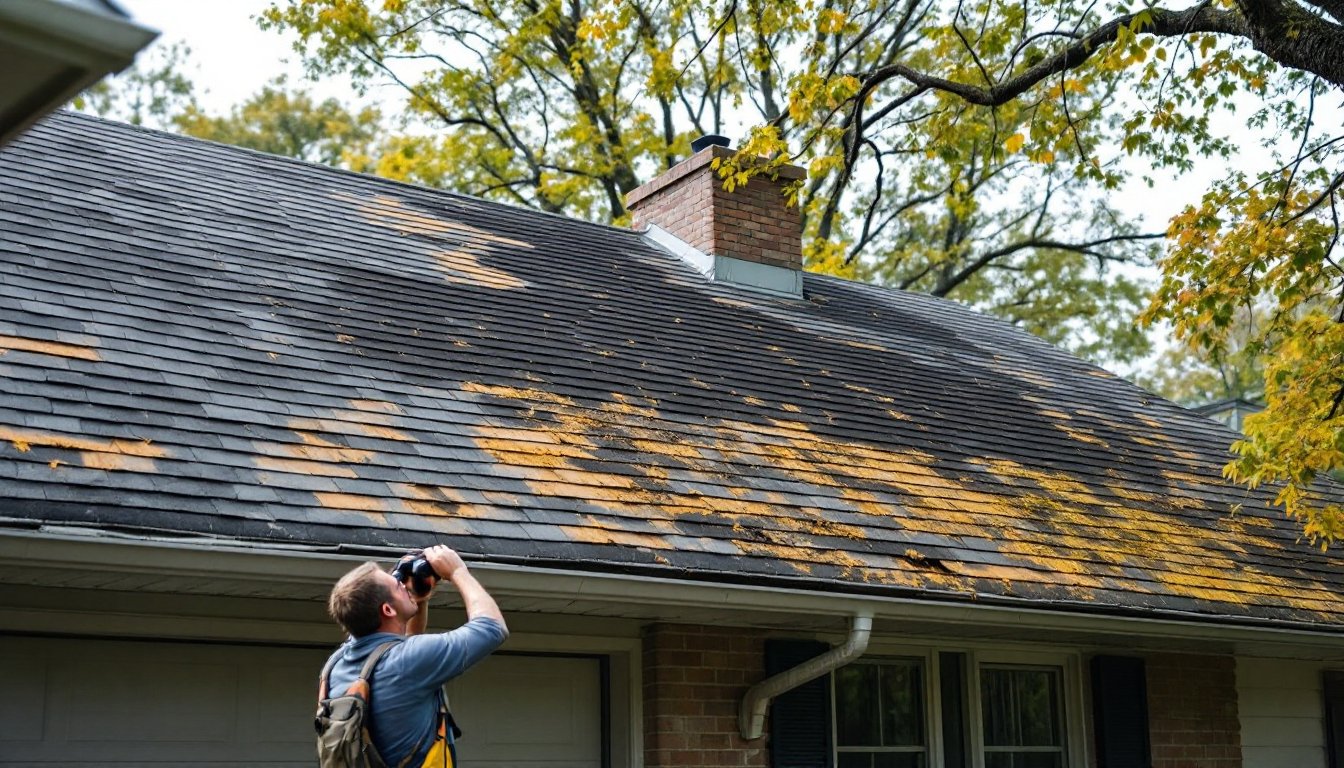
A safe inspection starts at ground level. Use binoculars to scan your roof from your yard or driveway for obvious damage: missing or curling asphalt shingles, visible bare patches, dark discoloration (mold or algae), or areas where shingles overlap unevenly.
If you decide to climb up, never do it alone, wear non-slip shoes, use a properly secured ladder on level ground, and tie yourself off with a harness if your roof pitch exceeds 6:12 (industry standard for low-slope vs. steep). Choose a dry, calm day, no rushing in wet conditions.
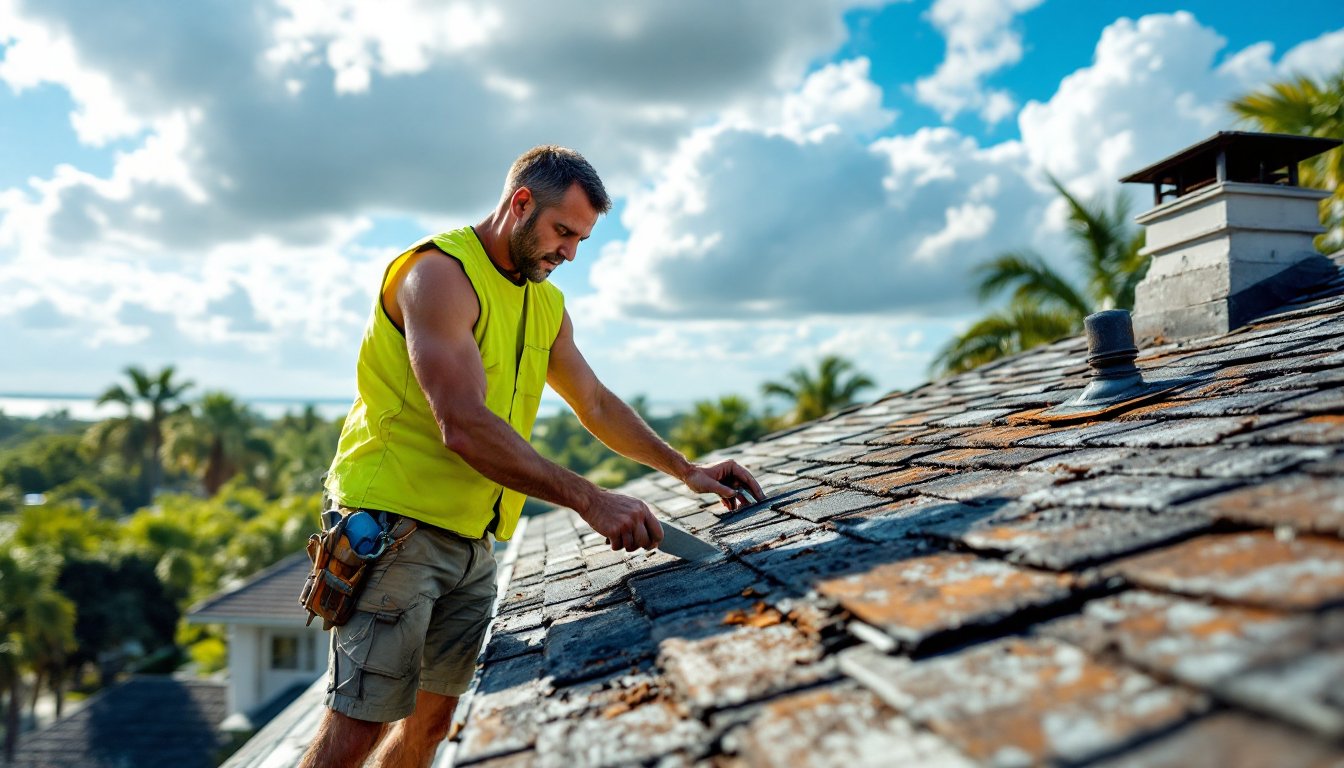
Once up there, look for these red flags: cracked or curling shingles, missing granules (you’ll see exposed dark mat), soft spots in the decking (press gently, it shouldn’t move), nail pops (nails backing out), deteriorated flashing around vents and chimneys, and moss clumps. Check the valleys, the V-shaped seams between roof planes, because water races down them and failures there lead straight to interior leaks.
Inside your attic on a sunny day, watch for light penetrating the roof and look for water stains on framing. These are your early warning signs. Take photos of any damage and note the location. You’ll need these for a contractor estimate or to document the problem for insurance.
Quick Fixes for Minor Roof Leaks and Damage
Small leaks and isolated shingle damage can often be patched without a full reroof. The key is catching them early.
For missing or damaged shingles: Remove the old shingle by carefully lifting nails (a flat pry bar works better than a hammer), slide out the shingle, and nail down a replacement in the same position. Use galvanized roofing nails (typically 1.5 inches long) driven just below the nailing line: overdriving creates water entry points. Seal the exposed nailheads with roofing cement (silicone-based lasts longer than asphalt). You’ll need one bundle of shingles per 100 square feet, though most suppliers sell them that way.
For curling or lifted shingles: You don’t have to remove them. Lift the curled edge, apply a dab of roofing cement under it, and press it flat. Nail it down if it’s still loose. This buys time until a full replacement.
For flashing leaks around vents or chimneys: These are trickier because the sealant fails over time. Apply roofing cement generously around the flashing edges, or use rope caulk (pliable, no gun needed) if you’re not comfortable with sealant. This is temporary: failing flashing typically needs replacement by a pro.
For moss and algae: Brush gently with a soft-bristle broom and apply a moss-killing product formulated for asphalt shingles. Never pressure-wash, it damages shingles and voids warranties. Improve attic ventilation and trim tree branches overhanging the roof to reduce shade and moisture.
When to Replace vs. Repair Your Cincinnati Roof
Repair makes sense if your roof is under 15 years old, the damage is isolated, and the roof is otherwise sound. A few missing shingles, minor flashing issues, or a small leak in good-condition shingles: repair away.
Replace your roof if it’s over 20 years old (most asphalt roofs last 15–25 years, depending on climate and maintenance), if you’re finding multiple problem areas in different sections, if the decking shows soft spots or rot, or if a prior repair contractor left the job half-done. In Cincinnati’s humid climate, water damage accelerates decay, what looks like one leak often signals systemic issues underneath.
Get a professional roof inspection (typically $150–$300 in the Cincinnati area) if you’re unsure. Many contractors offer them free if you’re considering a replacement, though independent inspectors are more objective. An inspection report documents the roof’s remaining life and helps with insurance claims if storm damage occurs.
Cost is a factor, of course. Repair can run $300–$1,500 for targeted work: replacement averages $8,000–$15,000 for a typical residential roof depending on materials and pitch. But replacing a failing roof now beats emergency repairs after water invades your attic. Roofing systems like HomeAdvisor’s Cincinnati roofing contractors can connect you with local estimates to compare.
Finding the Right Roof Repair Contractor in Cincinnati
Not all roofers are equal. Start by asking neighbors for referrals, local reputation matters. Then check online reviews on Angi (formerly Angie’s List), Google, and the Better Business Bureau. Look for contractors with at least 10 years in business, a local address, and consistent 4+ ratings.
Call three contractors for estimates. A good estimate should itemize materials, labor, removal of old shingles, and any prep work. It should specify shingle type, weight, and warranty (manufacturer’s defect warranty vs. workmanship warranty, get both in writing).
Ask whether they pull permits if needed. Roof replacement technically requires a permit in Cincinnati to ensure building code compliance and proper ventilation, legitimate contractors will handle it or explain why it’s not needed. If they skip permitting for structural work, that’s a red flag.
Verify liability insurance and workers’ compensation coverage before signing anything. If a roofer gets injured on your roof and you didn’t confirm insurance, you’re potentially liable. Request a certificate of insurance directly from their insurer.
Get the contract in writing with a start date, timeline, payment schedule (never pay in full upfront), and cleanup expectations. For expert advice on vetting contractors and navigating repairs, Bob Vila’s roofing guidance offers detailed walkthroughs and what to expect. A $200 investment in a thorough vetting process beats a $5,000 mistake.
Conclusion
Cincinnati’s climate demands regular roof attention. Inspect annually (especially after storms), address small problems before they become big ones, and don’t hesitate to call a professional when the job’s beyond your comfort zone or skill level. A well-maintained roof protects your entire home: it’s worth the time and money to get it right.