When your heating or cooling system stops working, panic sets in fast. A broken HVAC system isn’t just uncomfortable, it can put your home and family at risk, especially during extreme weather. Most homeowners don’t know the difference between a minor malfunction they can troubleshoot and a true emergency requiring immediate professional help. Knowing what to look for and how to respond can save you money, prevent further damage, and get your system running again faster. This guide walks you through recognizing critical failures, taking the right immediate steps, and deciding when to call in a pro versus what you can safely handle yourself.
Table of Contents
ToggleKey Takeaways
- Recognize critical HVAC repair emergencies by listening for unusual noises, smelling chemical or burning odors, and watching for water leaks or ice buildup on refrigerant lines—these all require immediate professional attention.
- Take immediate safety steps by turning off your system at the thermostat and breaker, checking your thermostat batteries and settings, replacing a clogged air filter, and clearing debris from outdoor units before calling for help.
- Handle only basic HVAC maintenance yourself—filter changes, debris removal, and thermostat resets—while leaving refrigerant work, electrical repairs, and compressor diagnostics exclusively to EPA-certified licensed technicians.
- Prevent costly HVAC emergency repair calls by changing air filters every 30–90 days and scheduling professional tune-ups twice yearly in spring and fall to catch worn parts before failure.
- Verify that any HVAC technician you hire is licensed, insured, and offers warranties (typically one year on labor, five years on parts) to ensure quality repairs and protection for your investment.
Signs Your HVAC System Needs Emergency Repair
Recognizing Critical Breakdowns Before They Worsen
Not every HVAC hiccup is an emergency, but some failures demand immediate attention. A complete loss of heating in winter or cooling in summer during extreme temperatures qualifies as urgent, especially if you have young children, elderly household members, or health-sensitive individuals on-site. Listen for unusual noises, grinding, squealing, or a loud bang followed by silence often signal mechanical failure rather than a simple thermostat reset. A bang, specifically, may indicate a compressor breakdown or refrigerant leak that worsens the longer the system runs.
Smell matters too. A burning odor, musty dampness, or sharp chemical scent (possible refrigerant leak) should trigger an immediate shutdown and a call to a professional. Refrigerant exposure is hazardous and requires EPA-certified handling. If your unit is leaking water indoors, pooling around the base or dripping into living spaces, you’re looking at potential mold growth and water damage that spreads quickly.
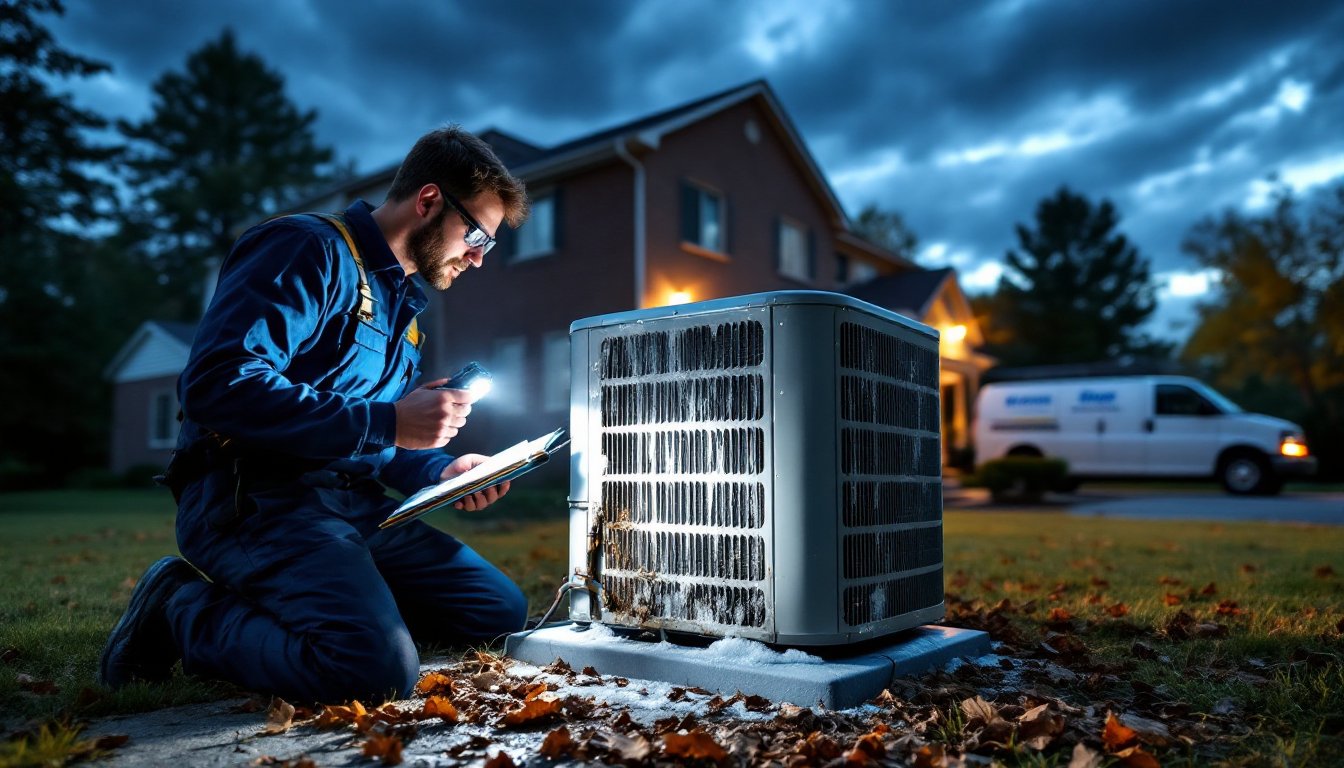
Visible damage is another red flag: bent fins on the outdoor condenser unit, visible rust, disconnected refrigerant lines, or ice buildup on refrigerant lines (on units without a reversing valve for defrost cycles) all point to serious problems. Ice can indicate low refrigerant, a clogged filter, or dirty coils, each requiring professional diagnosis. Don’t ignore these signs hoping they’ll self-resolve: they almost never do, and delays compound repair costs.
Immediate Steps to Take During an HVAC Emergency
Safety Checks and Temporary Solutions
First: Turn off your system at the thermostat and the breaker panel. This prevents further damage if there’s an electrical fault and keeps a faulty compressor from running and worsening. Check your thermostat settings, confirm the mode is set to heat or cool (not off), the temperature is set where you want it, and batteries aren’t dead. Replace them if needed: dead batteries account for many “emergency” calls that resolve with two AAs.
Next, inspect your air filter. A clogged filter (typically 1-inch or 4-inch thick, depending on your system) restricts airflow, which can trigger safety shutdowns. If it’s visibly dark, blocked, or hasn’t been changed in three months, swap it out. This takes five minutes and solves plenty of no-heat or weak-cooling complaints. Filters cost $10–$40 and are found in your furnace blower cabinet, attic unit, or wall-mounted return.
Check your outdoor unit for debris: leaves, ice, snow, or branches blocking the condenser coil will tank performance. Gently clear visible obstructions (wear gloves to avoid sharp fins). Don’t use a pressure washer, it can damage fins: a soft brush and a hose on low works fine. For ice buildup, don’t force it off: call a pro. Ice suggests a refrigerant or airflow problem that needs diagnosis.
If you smell gas (distinct rotten-egg odor added to natural gas for safety), leave your home immediately and call your gas utility’s emergency line, not your HVAC contractor. If the smell is chemical or sweet (possible refrigerant), turn off the system and ventilate: call an EPA-certified technician.
When to Call a Professional vs. DIY Troubleshooting
Some jobs stay in the DIY lane: others demand a licensed HVAC technician. Changing filters, clearing debris, and resetting thermostats are fair game for homeowners. Reading your thermostat display, checking that your return vents aren’t blocked by furniture or curtains, and ensuring your breaker hasn’t tripped, all safe and free.
Stop there. Refrigerant work, electrical repairs, compressor diagnostics, and any task requiring system access with specialized tools require licensing. In most states, only EPA-certified technicians can legally handle refrigerant. Attempting a DIY fix on sealed systems voids warranties, triggers legal liability, and often costs more to fix later. A freon leak can’t be spotted with the naked eye: diagnosing it requires pressure gauges and recovery equipment.
If your blower motor isn’t running, ducts are disconnected, or the condensate drain is backing up, phone a pro. Water pooling inside your furnace or air handler signals a clogged drain line (usually a PVC pipe), clearing it requires opening sealed components. Electrical work on the control board or contactor is also off-limits for DIYers: these carry serious shock hazard.
When you call, describe symptoms clearly: “Heat stopped overnight” beats “It doesn’t work.” Mention any noises, odors, or visible damage. Most emergency HVAC services charge a diagnostic fee ($75–$150) even if you decline repairs: this fee often applies to the repair if you proceed. Verify the technician is licensed, insured, and offers a warranty (typically one year on labor, five years on parts). Resources like professional HVAC hiring guides can help you vet contractors before emergencies strike.
Preventing HVAC Emergencies with Regular Maintenance
The cheapest repair is the one you prevent. A basic maintenance schedule takes hours yearly and costs a fraction of emergency callouts. Change your air filter every 30–90 days depending on pets, allergies, and air quality. Mark it on your calendar or set a phone reminder: it’s the single most impactful task you can do.
Twice yearly, spring before cooling season and fall before heating, have a licensed technician perform a tune-up. They’ll check refrigerant levels, clean coils, lubricate blower motors, test electrical connections, and verify safety controls. This costs $100–$200 per visit and catches worn parts before they fail during weather extremes. Many systems limp along at 50% efficiency when filters and coils are neglected: professional cleaning restores full output.
Keep your outdoor unit clear: trim vegetation 2 feet back, clear leaves and debris weekly during fall, and hose off dirt monthly (low pressure, gently). Protect the unit from hail and direct sun with a shade panel if your region is prone to storms, but don’t box it in, airflow is critical. In winter, remove snow and ice manually: don’t pour hot water on it (freeze-thaw damage).
Inspect ductwork visually where accessible (basement, attic). Disconnected seams, gaps at joints, or visible damage allow conditioned air to leak, forcing your system to work harder. Seal accessible gaps with duct tape or mastic (better than tape, actually) and insulate exposed ducts in unconditioned spaces. Home improvement guides on duct sealing outline affordable DIY techniques. Document your maintenance records: they prove system care and protect resale value. Most HVAC manufacturers require documented maintenance to honor warranty claims on major parts.
Conclusion
HVAC emergencies are stressful, but a calm head and quick action minimize damage and expense. Master the basics, filter changes, thermostat resets, and identifying warning signs, so you’re never blindsided. Know your limits: refrigerant, electrical, and compressor work belong with licensed pros. Build a relationship with a trusted HVAC contractor before you need one: proactive maintenance prevents most emergencies and keeps your system running efficiently for years. When winter or summer demands peak performance, you’ll be ready.